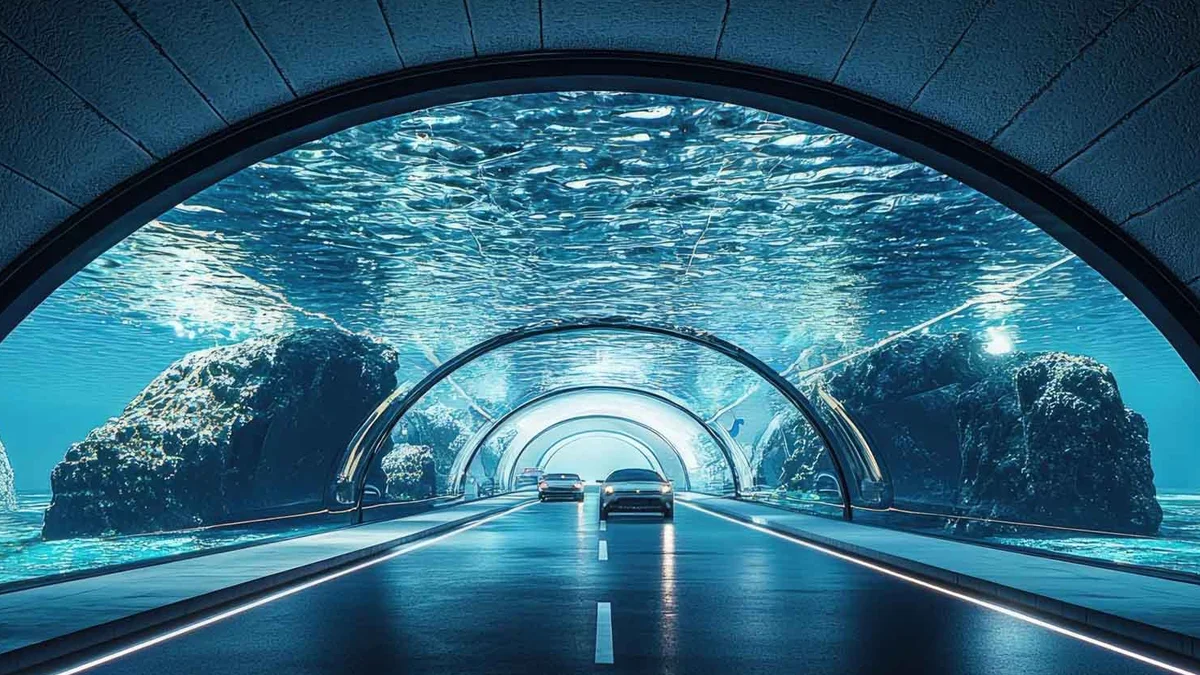
The Rogfast Tunnel is poised to become the world’s deepest and longest undersea road tunnel, connecting communities separated by fjords and challenging terrain. For millions of travelers, this engineering marvel promises safer, faster, and more reliable journeys.
Stretching beneath the waters between the districts of Randaberg and Bokn in Rogaland, the tunnel will span 16.6 miles and reach nearly 1,300 feet below sea level. Construction teams are drilling through dense seabed rock, employing cutting-edge technologies to ensure both safety and structural integrity. This isn’t just a tunnel—it’s a testament to human ingenuity and Norway’s commitment to modernizing its transport network.
Revolutionizing Norway’s transportation network
Currently, driving along the E39 from Trondheim to Kristiansand is no small feat. Travelers face a 21-hour journey covering nearly 1,240 miles, with seven mandatory ferry crossings. Winter conditions only worsen the delays, as harsh weather can cancel or reroute ferry services, leaving passengers stranded.
Rogfast will slash travel time to just 10 hours, eliminating the need for ferries across major fjords. With a four-lane design—two lanes in each direction—the tunnel will allow a continuous drive under the sea, taking approximately 35 minutes to traverse. For commuters and freight operators alike, this promises unprecedented efficiency and convenience.
Project director Oddvar Kaarmo notes that the tunnel will provide a reliable, weatherproof alternative to traditional maritime crossings. The enclosed environment shields drivers from Norway’s unpredictable winter storms, ensuring safer and more predictable transport for residents and tourists alike.
Engineering excellence beneath the ocean floor
The Rogfast Tunnel is already setting global records in engineering. It will be the longest undersea road tunnel in the world, the deepest four-lane tunnel ever built, and a benchmark in undersea construction. Massive amounts of rock and sediment are being excavated while engineers maintain stability under extreme pressures.
Advanced drilling techniques are essential for navigating the unique geological challenges, accounting for water pressure, seabed shifts, and potential seismic activity. The four-lane configuration marks a significant leap over previous tunnel designs, accommodating heavier traffic and providing emergency access routes.
Notable records include :
• Longest undersea road tunnel for regular traffic
• Deepest four-lane road tunnel beneath ocean waters
• Longest underwater crossing designed for automobiles
• Deepest road intersection below sea level
Safety is paramount, with integrated ventilation systems, emergency evacuation procedures, and continuous monitoring technologies built into the tunnel’s design. Rogfast represents a balance of ambition and practicality, pushing the limits of civil engineering while serving real transportation needs.
Investment and economic impact
Rogfast represents a €1.9 billion investment, reflecting the Norwegian government’s commitment to improving national connectivity. Work began in 2018 but faced delays from pandemic disruptions and complex geological challenges. Current projections aim for a 2033 opening, meaning a 15-year development timeline.
Funding combines public and private resources : 40% comes from government support, while toll revenues cover the remaining 60%. Drivers will pay approximately €30 per passage, providing sustainable income for ongoing maintenance and operation. This approach ensures the project’s financial stability without overburdening taxpayers.
Economic benefits extend beyond time savings. Enhanced connectivity will boost tourism, streamline freight transport, and support regional economic development. By eliminating ferry services, costs for businesses and individuals alike are reduced, and commercial operations become more predictable and efficient.
Transforming coastal connectivity
The Rogfast Tunnel is more than an engineering achievement ; it’s a cornerstone of Norway’s integrated transport vision. Once complete, the E39 coastal route will offer uninterrupted travel, improving access to isolated communities and strengthening emergency response capabilities.
Tourism will benefit from easier access to Norway’s stunning fjords, while commercial transport becomes more reliable. Environmental considerations are central to the design: reducing ferry traffic lowers fuel consumption and emissions, while the tunnel’s enclosed construction minimizes disruption to marine ecosystems.
I recall driving along the E39 years ago, stuck behind a ferry in icy conditions, wishing for a faster alternative. This tunnel embodies that wish, transforming the daily lives of commuters and travelers alike. It’s a rare example where bold infrastructure meets both economic opportunity and environmental responsibility.
The Rogfast Tunnel demonstrates how vision, engineering, and sustainability can merge to create a legacy project. Norway is setting a global benchmark, showing that ambitious infrastructure can enhance mobility, stimulate economic growth, and respect the environment. Once operational, it will change the way the nation connects its communities and will remain a model for future coastal projects worldwide.
As Norway nears this milestone, what do you think about the balance between massive infrastructure, environmental responsibility, and cost ? Share your thoughts and experiences—could such a project work in your region ?