Project company BBT SE confirmed the revised programme and budget on 20 October 2026, following extensive planning work to update the railway systems design, which was originally based on requirements established in 2008.
The changes reflect advances in railway technology, updated safety regulations and operational experience gained from Switzerland’s Gotthard Base Tunnel.
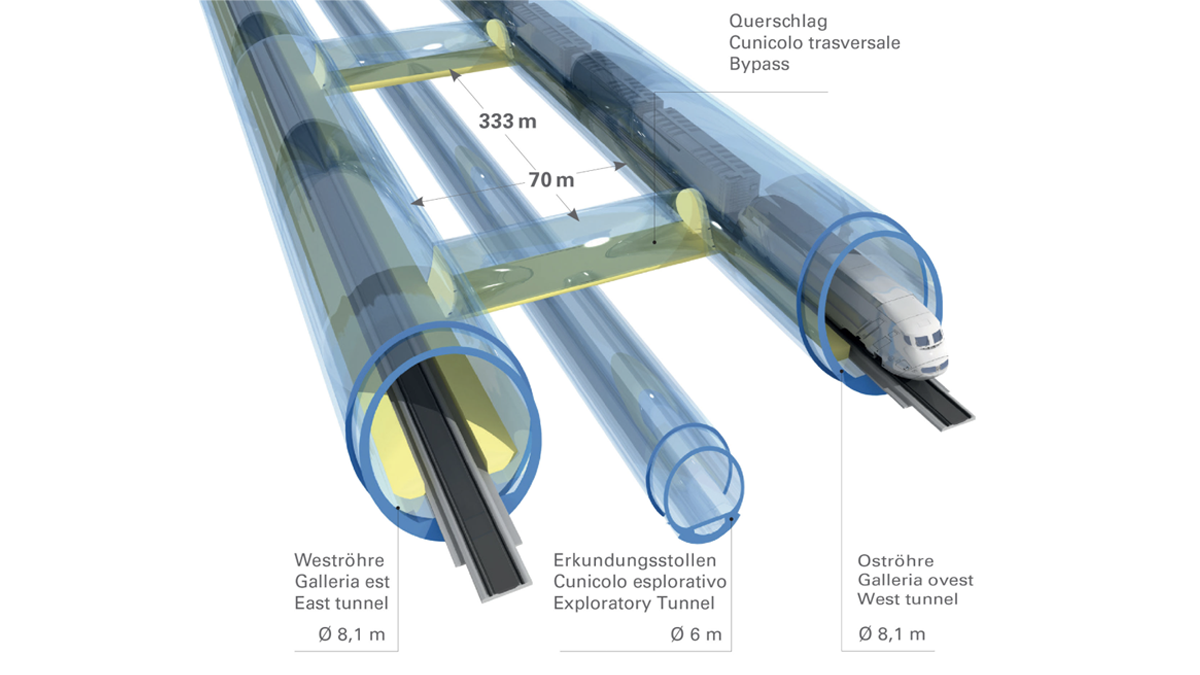
A central element of the revised design is the conversion of the exploratory tunnel, which runs beneath and between the two main railway tunnels, into a dedicated service tunnel. This will allow numerous technical systems originally intended for the main running tunnels to be relocated into the lower tunnel.
According to BBT SE, the arrangement will improve operational reliability by protecting equipment from dust and other potentially disruptive conditions, while allowing maintenance crews to access installations directly by vehicle without closing the main railway tunnels.
Under the updated schedule, construction is expected to be completed in 2033, followed by testing, trial operations, regulatory approvals and final commissioning activities ahead of the start of regular railway services in 2034.
BBT SE said the latest cost forecast of approximately €11.7bn reflects the additional underground works associated with converting the exploratory tunnel, increased expenditure on railway systems to meet current technical and safety standards, the extended construction period and inflation.
The revised programme represents a two-year delay against the previously anticipated 2032 opening, while the cost estimate has increased by approximately €1.2bn from the earlier €10.5bn forecast.
The Brenner Base Tunnel will provide a new high-capacity railway connection between Austria and Italy beneath the Alps. The twin main railway tunnels will extend approximately 55km between Innsbruck and Fortezza, forming a central component of the Scandinavian–Mediterranean TEN-T corridor.
Together with the existing Innsbruck bypass, the new infrastructure will create a continuous underground railway connection of approximately 64km, making it one of the world’s longest railway tunnel systems.
Fuente: tunnellingjournal.com